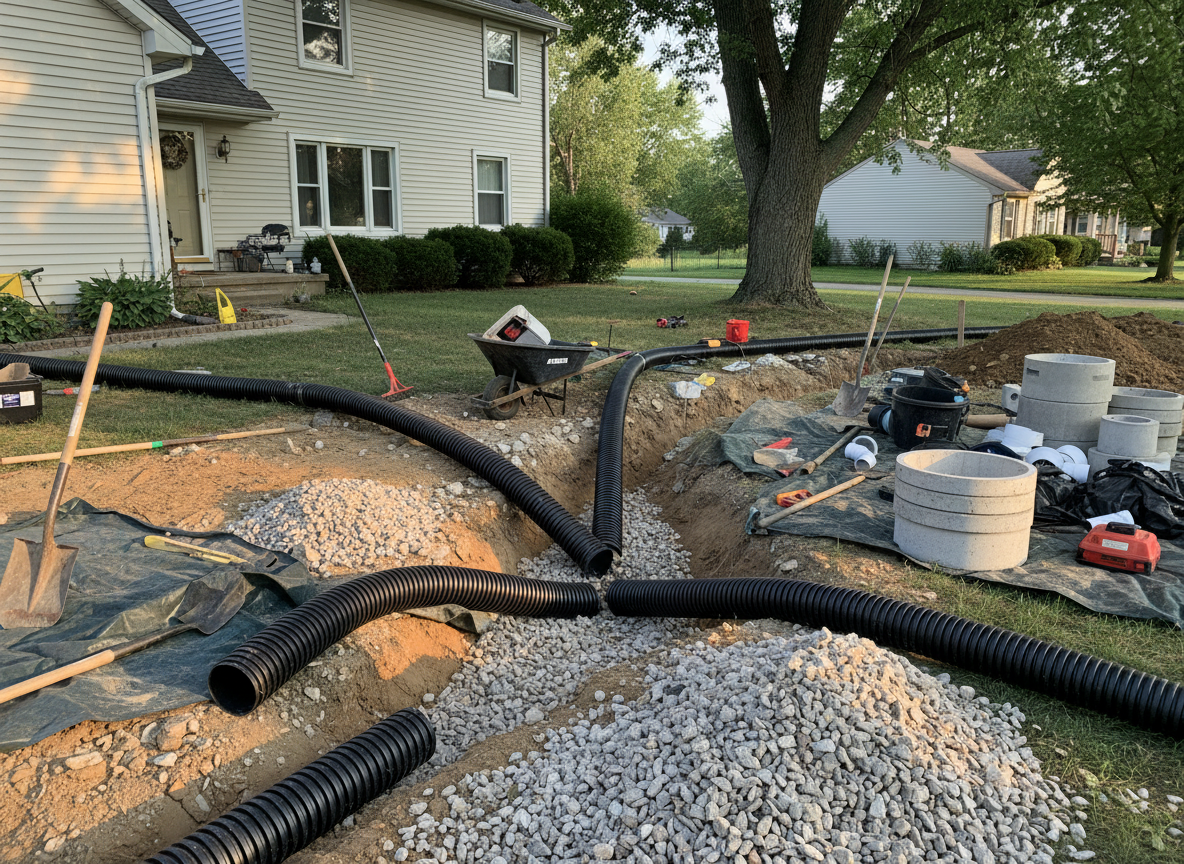
Drainage system installation starts with a site visit to map water flow patterns, identify low spots, and check proximity to foundations and outdoor spigots. The independent plumber selects pipe sizes and slopes based on the lot layout, then excavates trenches to the required depth before laying perforated or solid pipe on a gravel bed. Backfill uses native soil mixed with gravel to promote drainage while restoring grade.
Materials typically include schedule 40 PVC or corrugated polyethylene pipe, geotextile fabric to block silt, and clean gravel for the drainage envelope. In Cook County, installers follow local building codes that require minimum slopes and cleanouts at key junctions. Freeze protection calls for burying lines below the frost line so winter expansion does not crack pipe or heave the trench.
Heavy clay soils common around Tinley Park retain water and can shift during freeze-thaw cycles, so proper bedding and compaction prevent future settling. Homeowners are warned against connecting roof downspouts directly into yard drains without cleanouts, as leaf debris quickly clogs the system. The plumber also checks that new lines do not discharge onto neighboring properties, avoiding code violations.
Soil and Freeze Considerations
Illinois clay soils expand when saturated and contract during dry spells, stressing buried pipe. Installers place lines below the frost line and use flexible joints where needed to accommodate movement without breaks.
Technician insight
In Tinley Park, the thing that catches most people out with Drainage System Installation is the heavy clay soil that holds water and heaves when it freezes; if the pipe is not bedded deep enough with proper slope, it shifts every winter and you end up digging again in spring.
Drainage System Installation Services We Offer
✓French Drain Installation
Adds a gravel-filled trench with perforated pipe to intercept and redirect groundwater away from foundations and low yard areas.
✓Catch Basin Installation
Places surface inlets connected to underground pipe to collect standing water from patios, driveways, and lawn depressions.
✓Downspout Drainage Extension
Extends roof leaders underground to carry rainwater farther from the house and prevent basement seepage.
✓Yard Drain Repair
Locates and replaces collapsed or root-clogged sections of existing drain lines to restore proper flow.
✓Sump Pump Discharge Routing
Runs dedicated pipe from the sump pump outlet to a safe discharge point that complies with local rules.
How it works
- 1
Site Evaluation
The plumber walks the property, notes water pooling locations, and checks soil type and slope.
- 2
Plan and Permit Check
A layout is prepared and any required municipal approvals are confirmed before digging begins.
- 3
Trenching and Pipe Placement
Trenches are dug, pipe is laid on gravel, and connections to existing spigots or drains are made.
- 4
Backfill and Testing
Trenches are backfilled, grade is restored, and the system is tested with water to confirm flow.
Pricing
Pricing depends on the job and is discussed with the plumber after you call