2026-11-13 ·
How To Shut Off And Drain Outdoor Faucets Before Tinley Park Winters
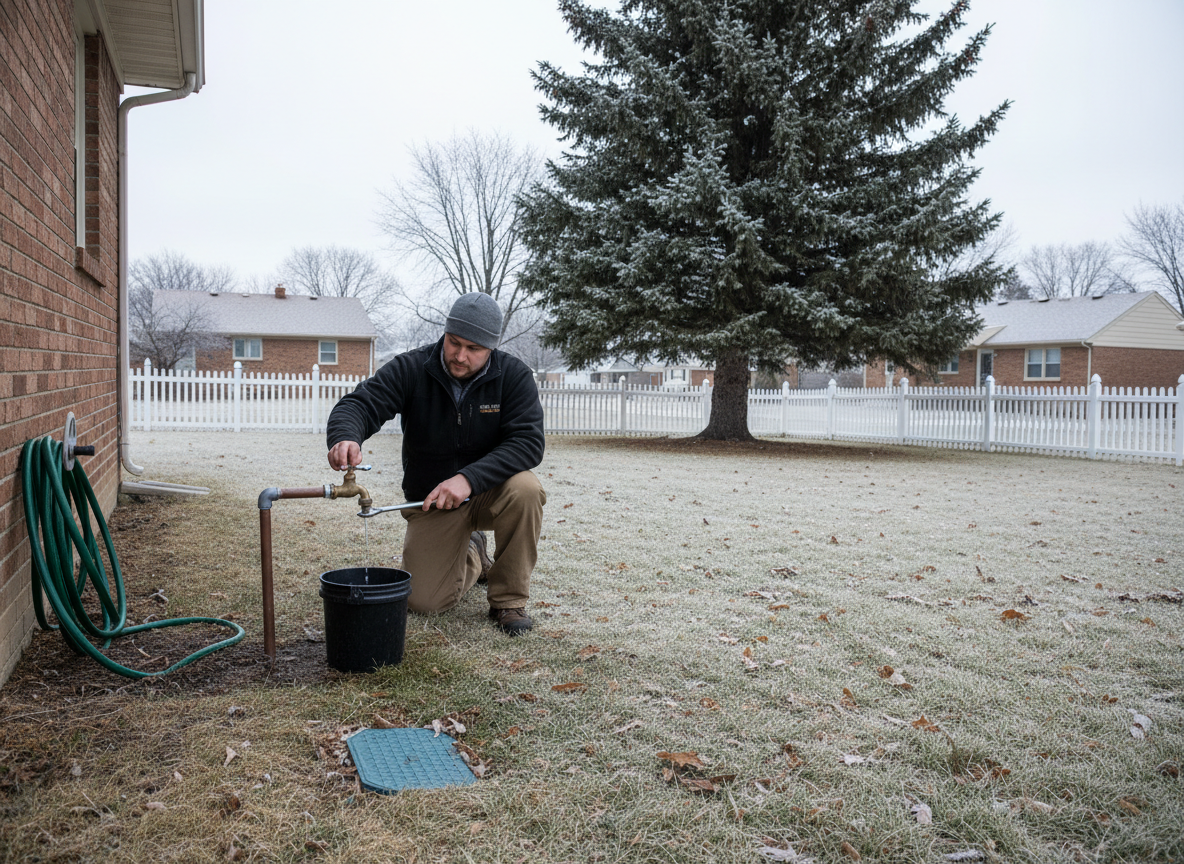
Shutting off and draining outdoor faucets before Tinley Park winters requires locating the interior shutoff valve, turning it clockwise to stop flow, then opening the exterior spigot to release remaining water. This sequence takes most homeowners 15 to 30 minutes per faucet when done methodically. Illinois winters bring repeated freezes that expand trapped water inside pipes, so complete drainage matters more than partial steps. The same approach applies across nearby communities where overnight lows regularly reach the teens.
Locating the Correct Shutoff Valve
Outdoor faucets in Tinley Park homes connect to supply lines that run through basements or crawl spaces before exiting the foundation. The shutoff valve usually sits on the interior pipe within a few feet of the wall penetration, often marked with a small handle or wheel. Walk the perimeter inside the home and check near laundry rooms or utility sinks where similar lines appear. Older properties built before 1980 sometimes route these valves behind finished walls or under floor access panels, requiring removal of a small cover. Once identified, test the valve by turning it a quarter turn to confirm it stops water without leaking at the stem. Homeowners who cannot find the valve should consult the related article on typical repair needs for outdoor spigots on older Tinley Park properties for common locations.
Shutting Off Supply and Opening the Spigot
Turn the shutoff valve fully clockwise until it stops, then return to the exterior faucet and open it completely to let gravity pull water from the line. Allow the spigot to run until the stream slows to a drip, which usually takes 30 to 60 seconds on standard 3/4-inch copper or PEX lines. If a hose remains attached, remove it first so trapped water inside the hose does not back up into the faucet body. Repeat the process for every outdoor spigot on the property, including those on detached garages or rear additions common in Tinley Park subdivisions. After draining, leave the exterior handle in the open position so any residual moisture can expand outward rather than against closed valves.
Protecting Lines and Checking Connected Drains
Once lines are empty, wrap exposed faucet bodies with foam insulation sleeves rated for outdoor use to buffer against sudden temperature swings. In Tinley Park yards where downspouts tie into underground drains, verify that yard drains remain clear so melting snow does not pool against foundation walls near faucet penetrations. Homeowners can follow guidance in the article on clearing yard drains after heavy rains near Tinley Park parks to maintain proper flow. Avoid using compressed air to blow out lines unless the system includes a dedicated blowout valve, because excessive pressure can damage older soldered joints. For properties with underground drain pipe repair needs, schedule inspection before winter sets in rather than attempting DIY clearing that might worsen blockages.
Final Winter Walk-Through
After completing the shutoff and drain steps, walk the exterior once more to confirm every spigot handle sits open and no hoses remain connected. Check that interior shutoff valves stay accessible and labeled for quick reference next spring. This routine prevents the most common freeze-related calls during January and February when Tinley Park temperatures stay below freezing for consecutive days. Residents in surrounding areas such as Orland Park follow identical steps because the climate pattern remains consistent across the south suburbs.